Sunday, December 19, 2010

Verona, Italy A


Verona, Italy
The inner city of Verona is still enclosed by ancient walls.

Once inside the walls, Verona is a tourist's dream. One can find beautiful structures, churches, monuments, museums, and Verona is know as the setting for Shakespeare's Romeo and Juliet. It is also the location of the so-callled house of Juliet with its famous balcony.
Outside of the city limits was a historic church with great views on the grounds and views overlooking the city.


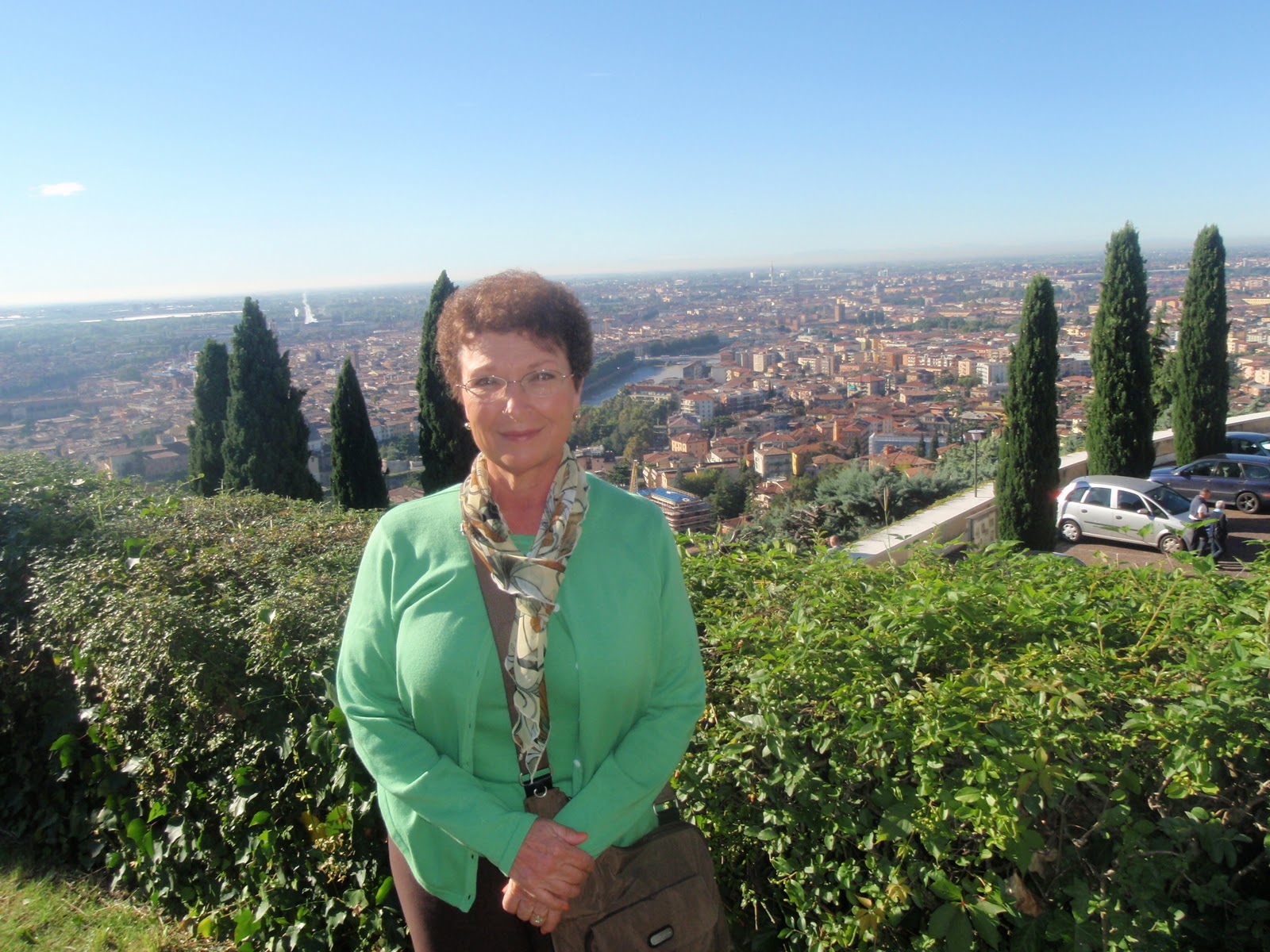
One of the better views, and of the city also.
Going back into the interior of the city, one has a good view of the church up on the hill and the restored Roman bridge.
And speaking of churches...

There was a church festival in the city. These folks were participating in their uniquely Swiss way.
The old and the new seem to complement each other.


Our recollection is that this building was commemorating something in 1523 rather than dating the building..
 This is supposed to be Juliet's balcony as the setting for "Romeo and Juliet" is Verona. Details that the house was built in 1930 and Shakespeare wrote Romeo and Juliet around 1591. But it makes a good tourist attraction. No, the little girl is not Juliet.
This is Juliet. People like to take their picture with her, and rub the bronze statute for good luck. 
If one squints his eyes at the sign in the center, the time was 12:03 and lunch time. But, I had to get in one bicycle shot as the purported theme of this blog is cycling.

We were able to stay in Verona for two days and all of the above just represents the first morning. We have fond memories of Verona as for the rest of the stay. We were able to do what we wanted-when we wanted-and for as long as we wished. Verona was an excellent introduction into Italy.   

Saturday, December 11, 2010

Innsbruck, Austria

Following the inspirational Passion Play, it was time to move on in our journey. I had to take one last shot of a view of Oberammergau before heading to Verona, Italy via Innsbruck, Austria. Innsbruck was the home of the 1964 and 1976 Winter Olympics and many of the structures are still prominent in the city.
Some of the first snowfall in the mountains. It was the latter part of September after all. I was focused on the pretty mountain and snowfall, I wish I had seen the sign on the lower left and captured it and the flavor of the countryside.
We finally arrived at Innsbruck, and if the picture were larger I could prove it by the picture frame label. Also not clearly seen in the small shot is Christine sporting her new Alpine hat.

After a short tour by a guide, we were left on our own to wander through the town. So of course lunch was in order. Below is an example of what you get when you order just tea. I should explain...in Texas when one orders tea you get a big glass of iced tea usually with free refills.
However, Christine has no such problem as she can order her beverage in many different languages.

Bier, bitte.

Of course we have our row houses in places such as Boston, Washington, DC and elsewhere, but the row houses, buildings, and stores in Europe always fascinated me. They were so colorful and seemingly well maintained for their age.

People are interesting and watching them can be a lot of fun.
Well, he used to be a "people".
I forgot if the little girl was running from-or to-mommy.
A different mix of people and they all looked happy.
Except for Miss Goldilocks. Must have been sitting in Papa's chair.
You will have to trust me that the sheep grazing on the hillside (little white dots in center) was a peaceful sight and just on the outshirts of a large city such as Innsburck. We must get a camera with powerful zoom lenses before out next vacation.

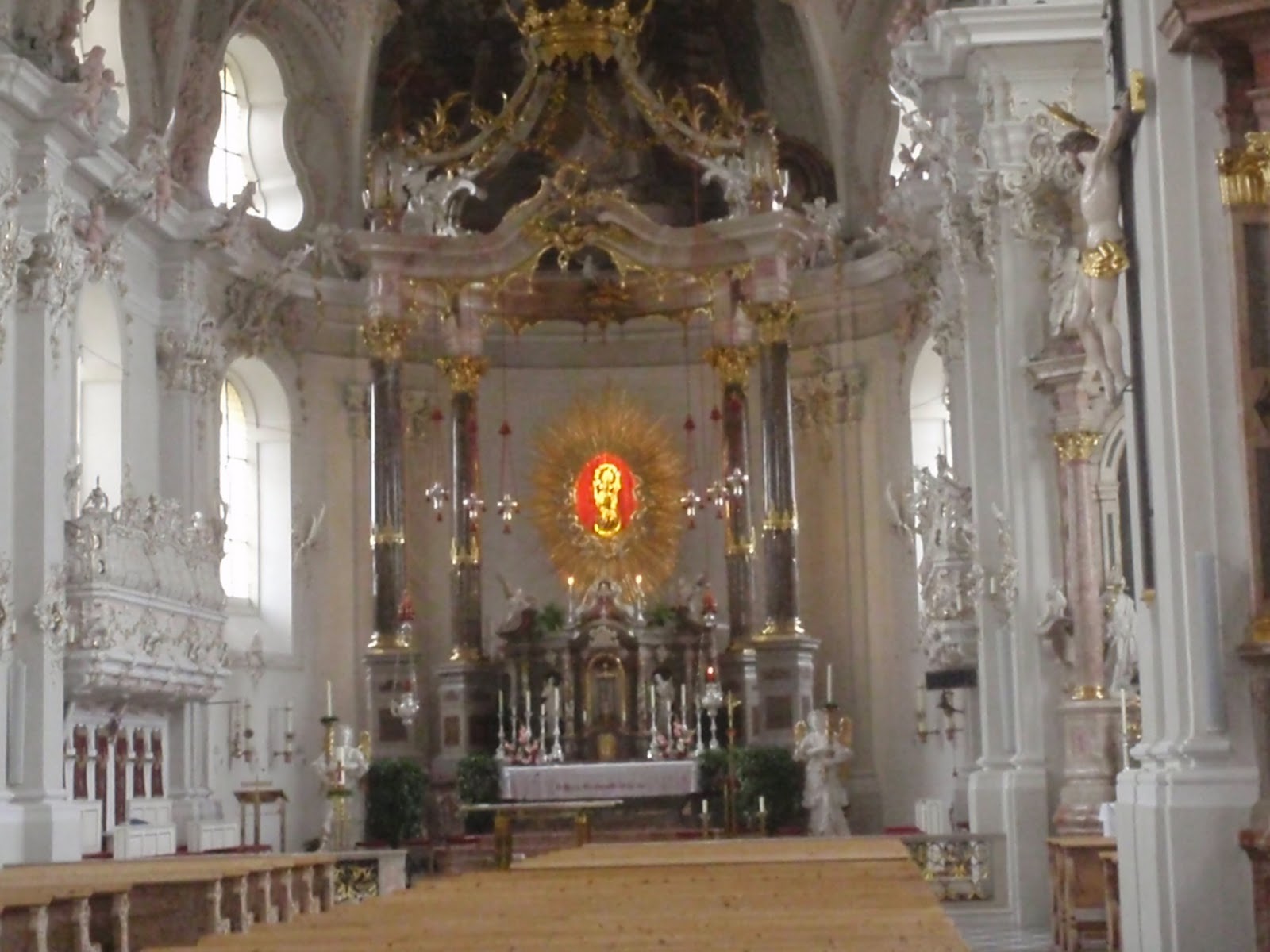
Peaceful also describes the feeling seeing the plentiful number of churches in Europe.

All looked inviting and seemed to invite one in. So we did.
We had to meet up with the group and were out of time. It is impossible to take in all the city has to offer in a short while, but we enjoyed the time that we had. Next stop Verona, Italy.


Thursday, November 25, 2010

Passionsspiele

Passionsspiele--Passion Play
Oberammergau, Germany
May 15-October 3, 2010
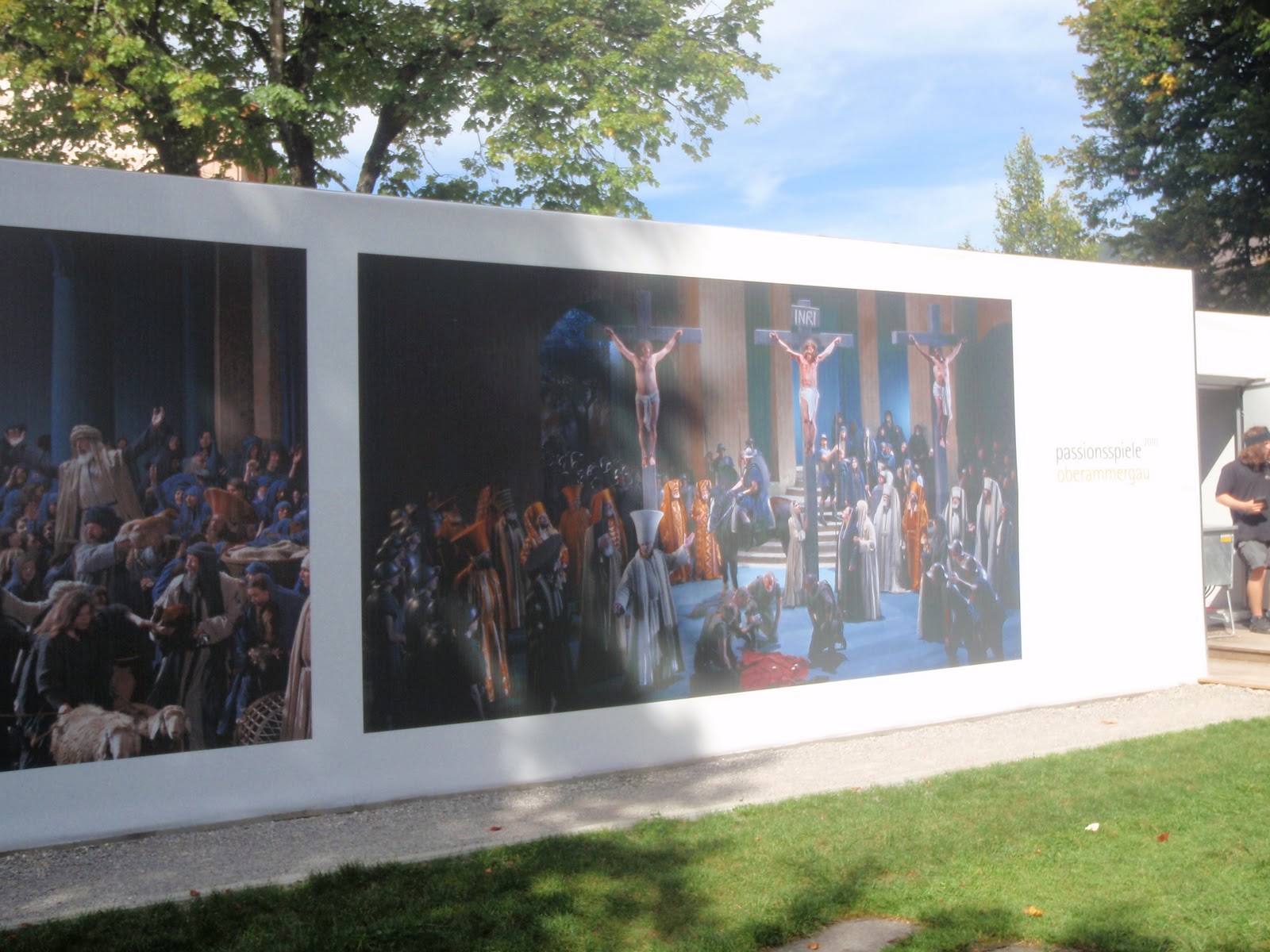
The Passion Play was the primary reason that we went on our tour this year. The passion play had been on our "bucket list" since we visited Oberammergau in the summer of 2004. While strolling through the town, we came upon the auditorium of the play site and read the advertisements for the upcoming 2010 season. Christine and I both expressed a "wouldn't it be nice to come back and see the play." Neither of us had any idea that it would come about. 
The passion play, a "Play of the Suffering, Death, and Resurrection of Our Lord Jesus Christ", had its origins in 1633. During the Thirty Years War, the Oberammergauers were among the many who suffered and died from the plague. The Oberammergauers swore an oath that they would perform a play of the suffering and death of Jesus every ten years if they were spared from the bubonic plague. By July 1633, the death rate had subsided to one. The villagers believed they were spared, and the first performance took place at Pentecost 1634. The stage was put up in the cemetery above the fresh graves of the plague victims. Thus began the history of the passion play. The 2010 season marked the 41st performance spanning 376 years.
The present stage was built in 1928 and the auditorium in 1998. The theater has about 4,700 seats.
The actors, musicians, singers, director, technicians, etc. have all been born in Oberammergau or have lived in the village for at least 20 years. Approximately 2,400 villagers, or one half the population,  are in the play.
There are 21 principal parts (Jesus, Mary, John, Judas, Peter, Pontius Pilate, Caiaphas and others).

The cast includes 120 smaller and bigger speaking parts, solo singers, 100 male and female choisters, orchestra, Apostles, priests and scribes, Roman soldiers, and temple guards. It also seemed as if every youngster in the village played a part in the performance.


The citizens of Oberammergau devote a year of their lives to re-enact the life, death, and resurrection of Christ.  All performers are laymen and pursue their usual careers as wood carvers, house wives, and so forth.
In real life for instance, the actor who portrayed Jesus is a psychologist, and the Mary Magdalene player works as a flight attendant.

Consistent with the devotion of performing in the play, the houses and shops display religious scenes. The frescos in this village are extraordinary and can last hundreds of years.

"Jesus" and "Mary" are ordinary people. Likewise, the people who live in the houses and work in the shops, all displaying beautiful designs, are ordinary people. But we wish to express our gratitude for their participation in an epic performance of Passionsspiele which runs for seven hours with a three hour intermission for supper. Whereas they fulfilled the tradition of some 376 years, they also wonderfully fullfilled another of our fantasy tours. On behalf of the half million people who shared in your devotion and were grateful for your efforts this year, Thank you, Oberammergaurers!!